
LESSON 5
Advanced Style
We’ve come to understand that what’s beautiful is real. For all of you in this class – here for interiors, your products or your business – I want you to create spaces, products, ideas, moments and photographs where life comes first, not the look. I truly believe that is the only way to move forward into success, no matter what that looks like to you, with genuine joy and pride – and earned success that can’t be taken away from you. It’s what makes this class so different from all the others, and it’s why my students have achieved such great heights, and changed entire industries all on their own.
It’s powerful. It’s how to start a trend or build an icon, not follow one. It’s how you are going to start calling yourselves, finally, Advanced Stylists.
Last chapter, we learnt the first Principles of Style, which can be applied to any purpose, to design, to spaces, to your images, to your ideas. The key to nailing these first principles is to practise them constantly rather than just understanding them conceptually. The creative side of your brain needs exercise to start connecting new pathways in your brain, and once this starts to happen, you’ll find yourself creating art and style that is unique to you and beautiful in ways you never expected possible.
Now we want to take it further with some more complex philosophies for you to start to think about. This class could take you through exactly how to style a room, a shelf, a bedroom – but if you wanted that, I’d tell you to just pull up Pinterest and pick what you’d like to emulate, and copy it moment for moment. This class aims to give you much, much more. Spaces and interior images are just a series of beds, chairs, surfaces and lights – and objects that you find in them are just instruments to say what you want to say, and help you behave how you’d like to behave. That’s not complicated and there is no formula, I won’t ever waste your time and investment pretending that it is so.
What we are really passionate and excited about is in giving you a language & medium for your ideas. To express your values and stories which we have already started to discover in earlier chapters, and for you to have your own special identity, that you created for yourself. To become Advanced Stylists and, ultimately to become true Artists.
There is no better feeling in the world, just you wait and see.
A few things to know …
This chapter is a little interiors focused, and for those here for their businesses and craft – I’d like you to approach it with an open mind to learn about the senses and interrogating what is important to you. Also, some useful tips for creating spaces that feel beautiful for you to be in – we all exist in a space somewhere!
Now, to shake things up this time, we have a little homework first!
05. Homework
This chapter, we have a little homework first for a change, surprise! Kick back with a drink and enjoy the next 45 minutes of this fantastic show, featuring a designer I really admire, the first of her kind to start thinking about the science of spaces and the human experience of aesthetics – I know you will love this episode as much as I do.
Watch: Abstract: The Art of Design | Ilse Crawford on YouTube or Netflix
I bet you all enjoyed Ilse’s work as much as I did when I first came across it – her approach truly creates spaces and ideas which improve our lives. I love the idea that design is a process not an aesthetic – in fact, that is another thing I’d love you to write down, and remember often. Design is a process, not an aesthetic.
I’m not going to reteach Ilse’s work or her ideas. Instead, this chapter is about distilling what I have learnt, and loved, in 5 main areas I really think are key to consider in your projects. The idea is to write them down, remember them – and work through your ideas for each when the time comes. Again, there is no formula, only hypotheses and philosophies – but the fact that they exist gives your own ideas and dreams room to move in ways we know will work for you.
It is a scary thing, to try ideas and aesthetics you haven’t seen before, or are not certain will work; please keep close to your #principlesofstyle community for support. I can tell you I’ve never taught a single student who hasn’t suffered from self-doubt – I recently watched this David Bowie interview where he talks about feeling the same. I do, too, in everything I do and create. It’s really difficult at times to stay the course but, at the end of it, I have always been so proud and so glad that I did. I encourage you all to be vulnerable and brave in this too, as it’s probably something you will be doing for the first time! I promise, the more you grit your teeth, trust me and dive in, the easier it gets.
Okay, let’s begin.
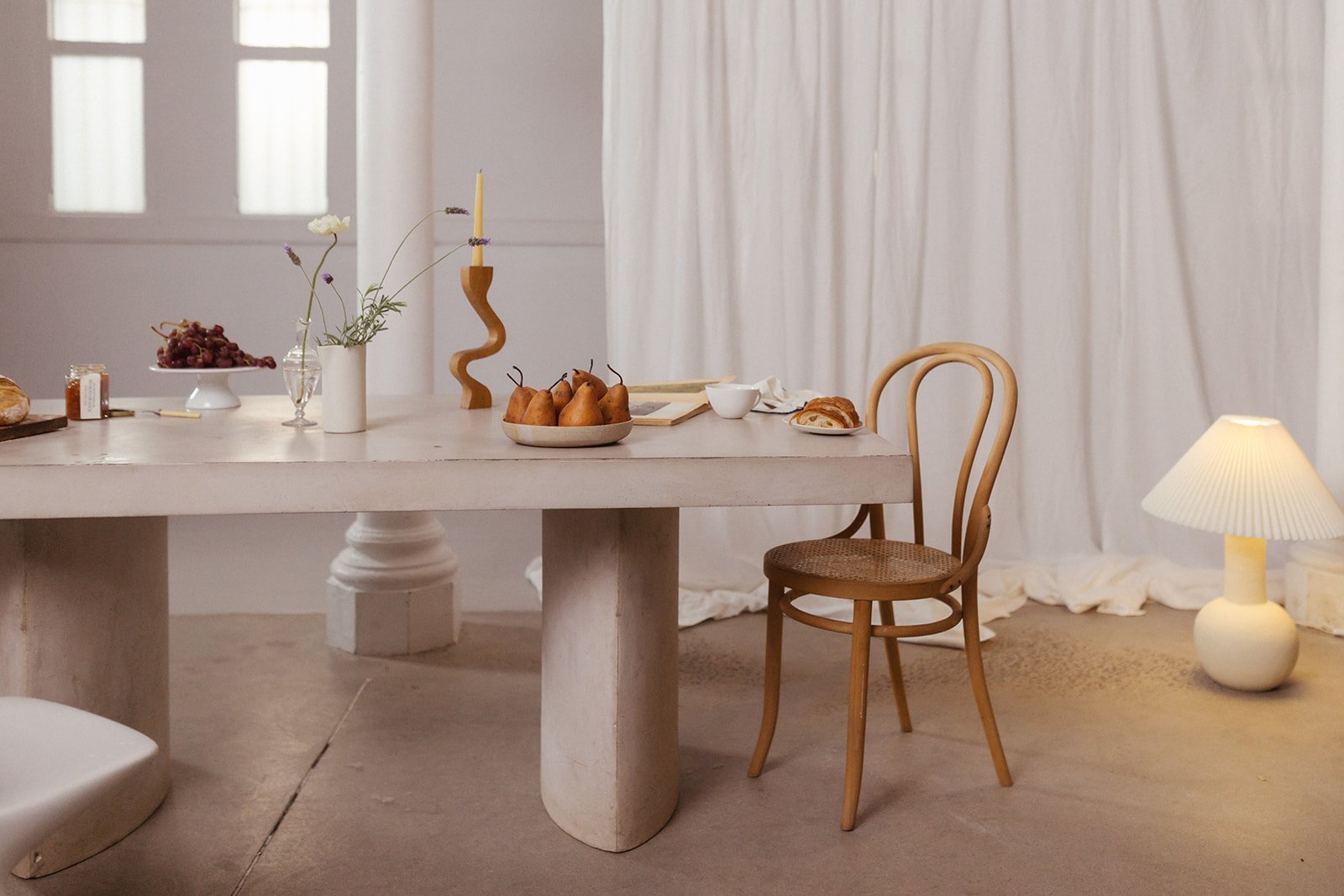
Lesson: Materials
To ponder: “We live amid surfaces, and the true art of life is to skate well on them.” ― Ralph Waldo Emerson
The materials you use in your projects are the DNA of your creations. It is SO important to always choose a solution to design the desired experience you are trying to create, of which Ilse Crawford is a master – as you all have seen in our homework kicking off this chapter.
The reasons why relate closely to what we learnt about circles and the invisible in the previous chapter. Our subconscious recognises quality, and materiality. That which is from nature, like silk, cotton, stone, real wood, linen, makes us feel good, comfortable — home. When we see a polyester tag, a plastic light switch, the heating remote, extension cords, it brings us out of that comfort and into the bustle and the fatigue of the modern world.
Hard textures, such as stone, wood, leather and steel are also important to consider. They provide security and protection for us, so we need to use them in the structure of our homes and spaces, in offices and to create environments that feel more professional. For instance, if I was designing a meeting room or a gallery, I would tend towards these harder textures. This is why a leather couch in a living room never feels that cosy, or tiles in a bedroom feel mostly out of place.
Can you see now how to use texture and material to create an intended experience?
I want you all to consider the materiality of every single thing you put into your projects – and I personally always try to match it as closely to nature as I can, and suggest you might do the same. This might mean adding a handful of the soil from your yard into lime wash paint for your walls, researching the material mix of the couch you would like to buy – or better yet, choosing a pre-loved couch that is perfect for you, and having linen or cotton slipcovers made for it that are washable.
You should always choose responsibly for the environment, yes – but this concept is more than that. It’s about us being human, and therefore part of nature and feeling as comfortable as we possibly can – which we will do if we surround ourselves with things that are part of nature as well.
Here are some ideas to think about. For interiors, how beautiful does a lime washed wall feel over a painted one? For those making, think about the difference in using reclaimed wood rather than plantation pine? Or for those with a business – products wrapped in organic tissue rather than plastic? Considering packaging for products, how might opening a hand-wrapped gold foil chocolate bar feel to you over ripping apart plastic? Every detail ultimately shapes our perception, our experience and the story we, or our audience, are making about our work.
If we can really think through EVERY detail, we can create such pleasurable, joyful, playful, sensual, relaxing (… the list continues!) experiences and engage our senses.
Workbook Time. Reach for your workbook, and complete Exercise 5.1, now. This exercise is about picking out some material elements you are considering using for your project, and thinking through each one. The hope here is that you will learn to make decisions using this process about materials in your work forever more.
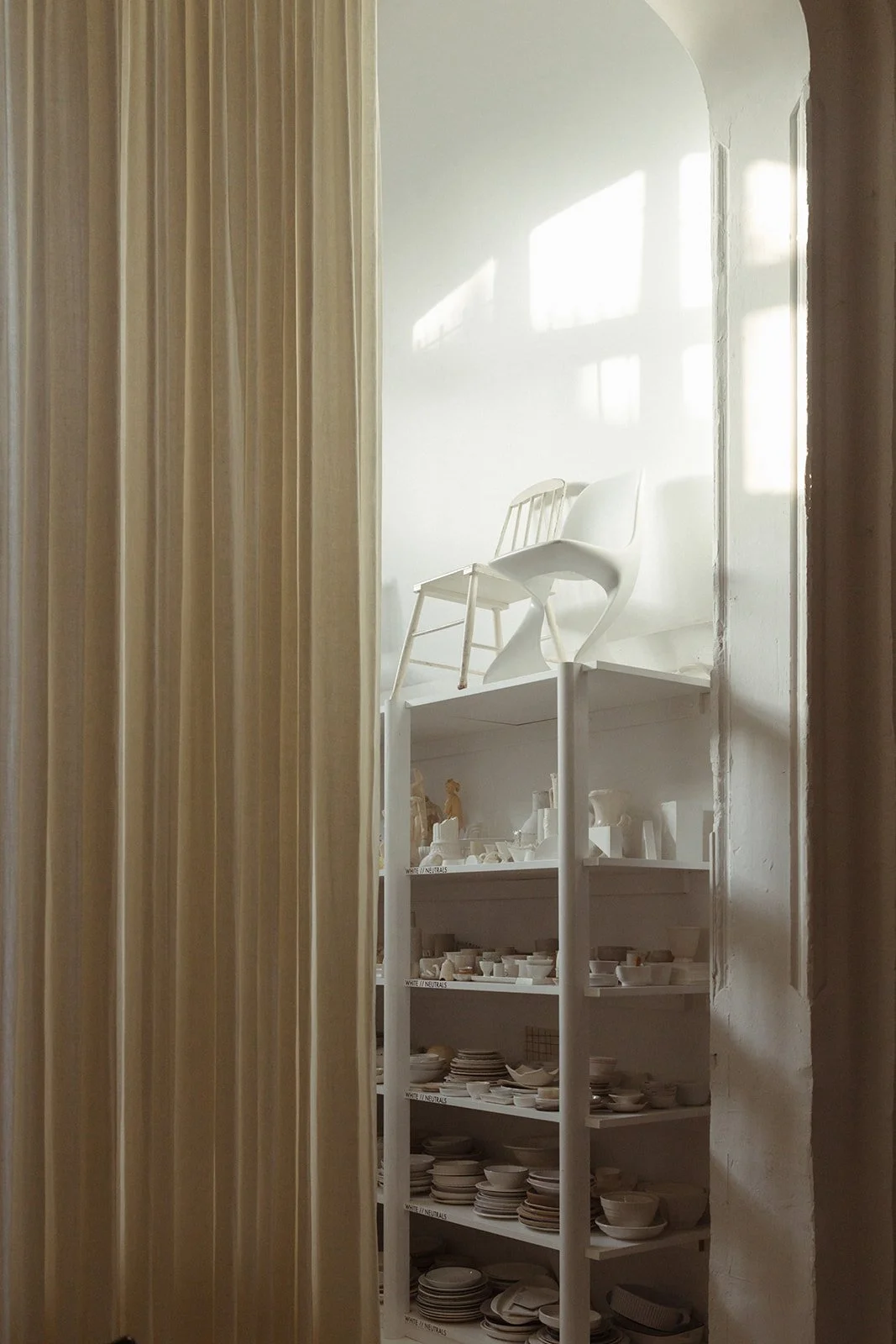
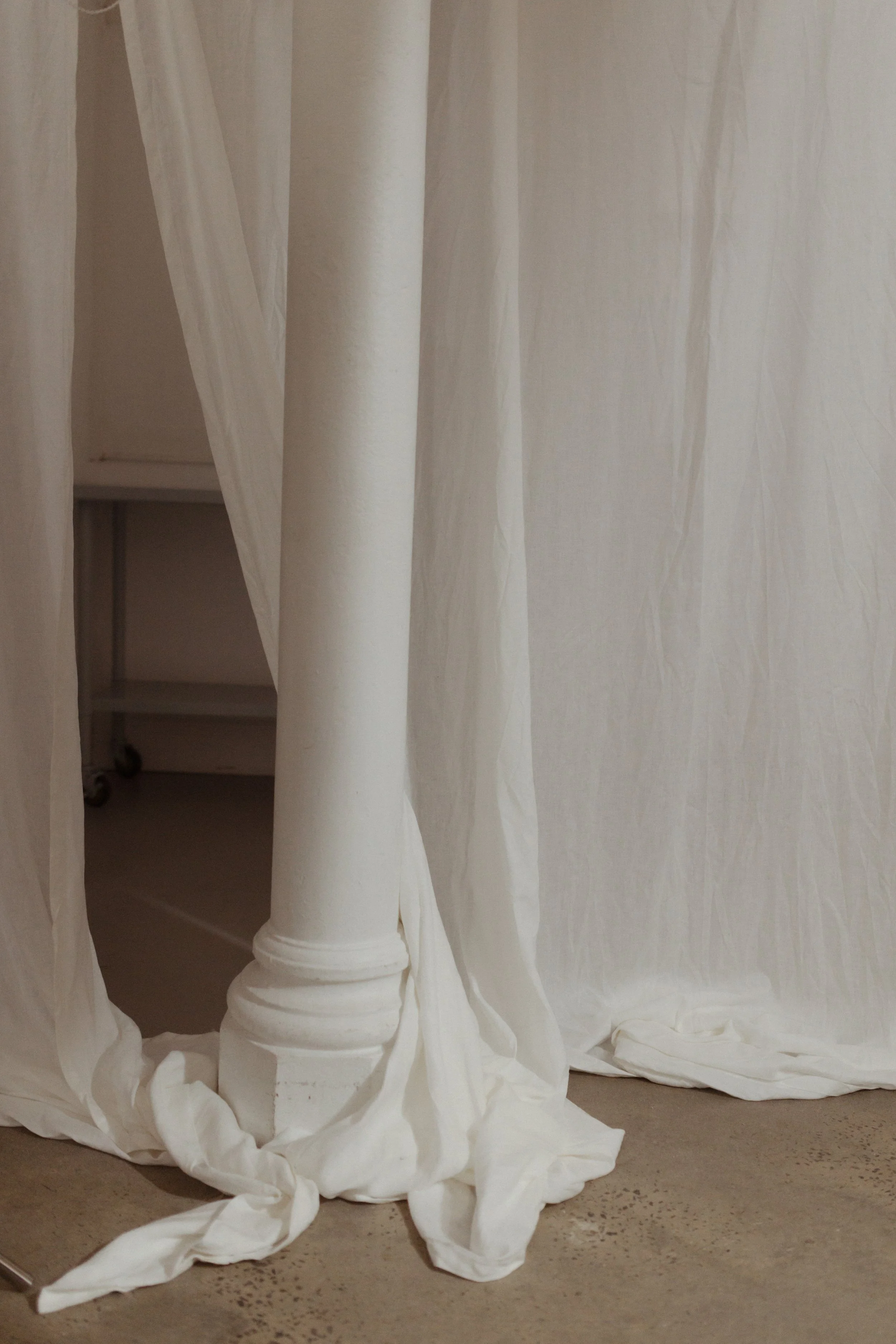
Materials: They shape how things around us not only look and feel, but also subconsciously translate a meaning to us. Take the above example, and think about how this scene would feel to you if this column perhaps was a stainless steel support post, with synthetic curtains that fell to just above the floor. Imagine if the floor was carpeted instead. See how every single detail moves us to feel a certain way? If we can slow down, and think through the effect certain materials have on us, we can create such powerful experiences with the simplest of choices.
Lesson: Objects Are Just Instruments
To ponder: “Whatever your eye falls on – for it will fall on what you love – will lead you to the questions of your life, the questions that are incumbent upon you to answer, because that is how the mind works in concert with the eye. The things of this world draw us where we need to go.” ― Mary Rose O’Reilley
Our interiors or the objects we create or choose to use are just tools to shape how we behave and respond. I love to read – I love to spend long nights doing so, so I’ll use this as an example. If I let my mind wander, firstly I want the perfect chair – nothing too hard, so I can sit for a long time, but not too soft either – I’m of the age where I will fall asleep. I think it needs to be a single chair – it’s hard to concentrate with someone snuggled up in your lap – but I’d like a way to pop my feet up.
Now, what else – I’d love a light, something that hangs low and shines softly. I’d love somewhere to put a stack of books and a cup of tea – and my library needs to be close by. And then what – where do I want this to face? Out of a window towards the sea? In a dark quiet room? In the softness of my bedroom?
I could really go on, but I know you’re starting to understand. With the work we are doing, be it creating spaces, creating our products or our business, we are designing an experience for people – perhaps ourselves, perhaps others. We are waving a magic wand over a small part of the world. Thinking about objects or materials as just instruments to instruct people how to behave, how to feel, what story you want them to tell themselves is our new super power as Advanced Stylists.
Our objects, furniture, decoration, surfaces are all instruments to help us live or, in the best cases, help us live well. We’ve all stayed in Airbnbs with a hard, two-seater, thin vinyl, cheap sofa. The stay has been fine, but we didn’t spend much time at home. Now think about the stays you’ve had that have had a couch the size of a bed, with cushions and throws and soft pillows that are hard to get up out of. Consider that lovely candle you were gifted that you just adored the scent of, but perhaps wouldn’t have purchased yourself because the shiny plastic labels felt cheap and off-putting.
I would like everyone taking this class to understand that our work is about shaping the behaviour you want in various spaces, or when using your products, or having an experience with your business. Let’s practise with our next exercise.
Workbook Time. Reach for your workbook, and complete Exercise 5.2, now. Let’s start thinking through parts of our projects, the experience you are trying to design, and how we might achieve that with the smallest of details.
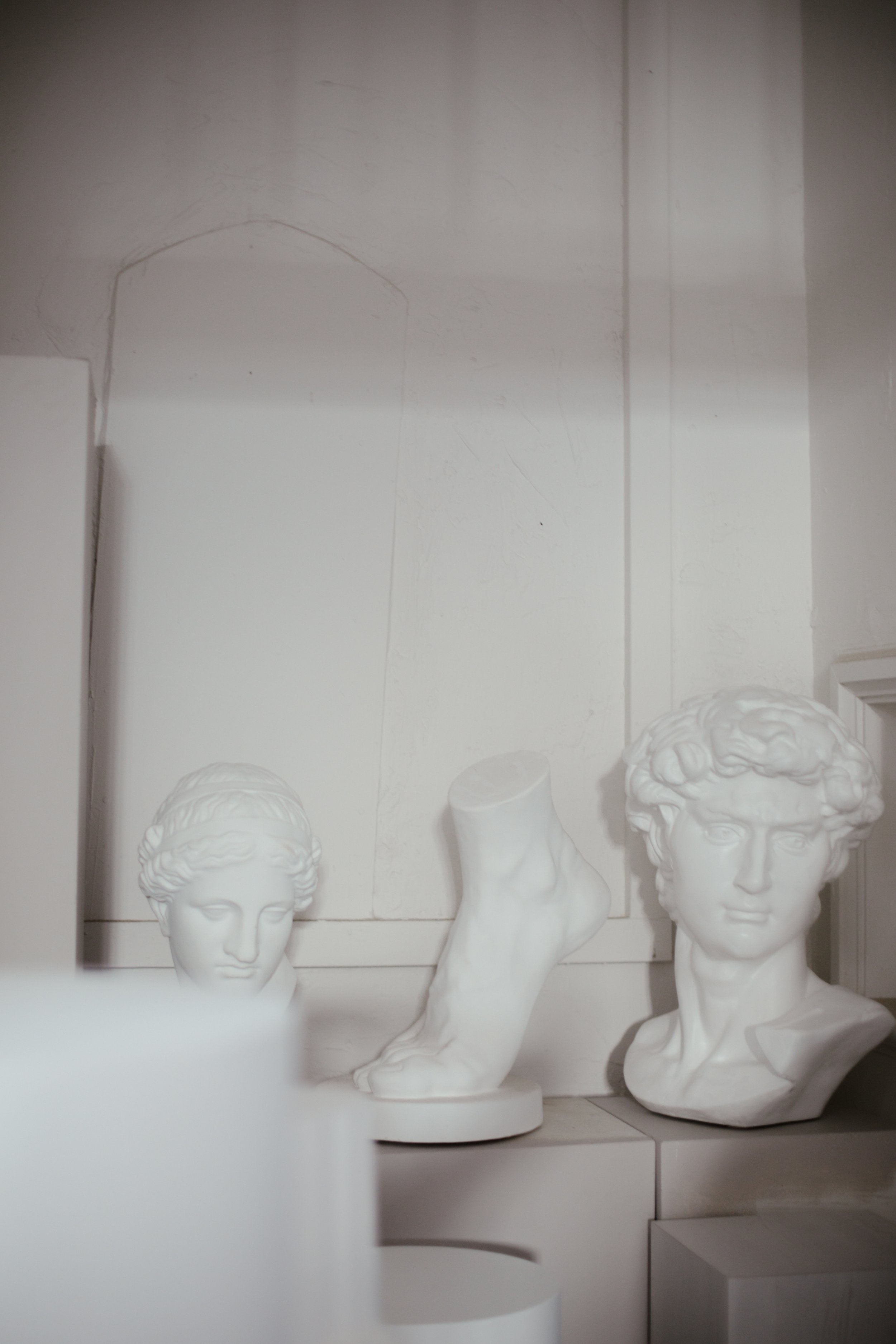
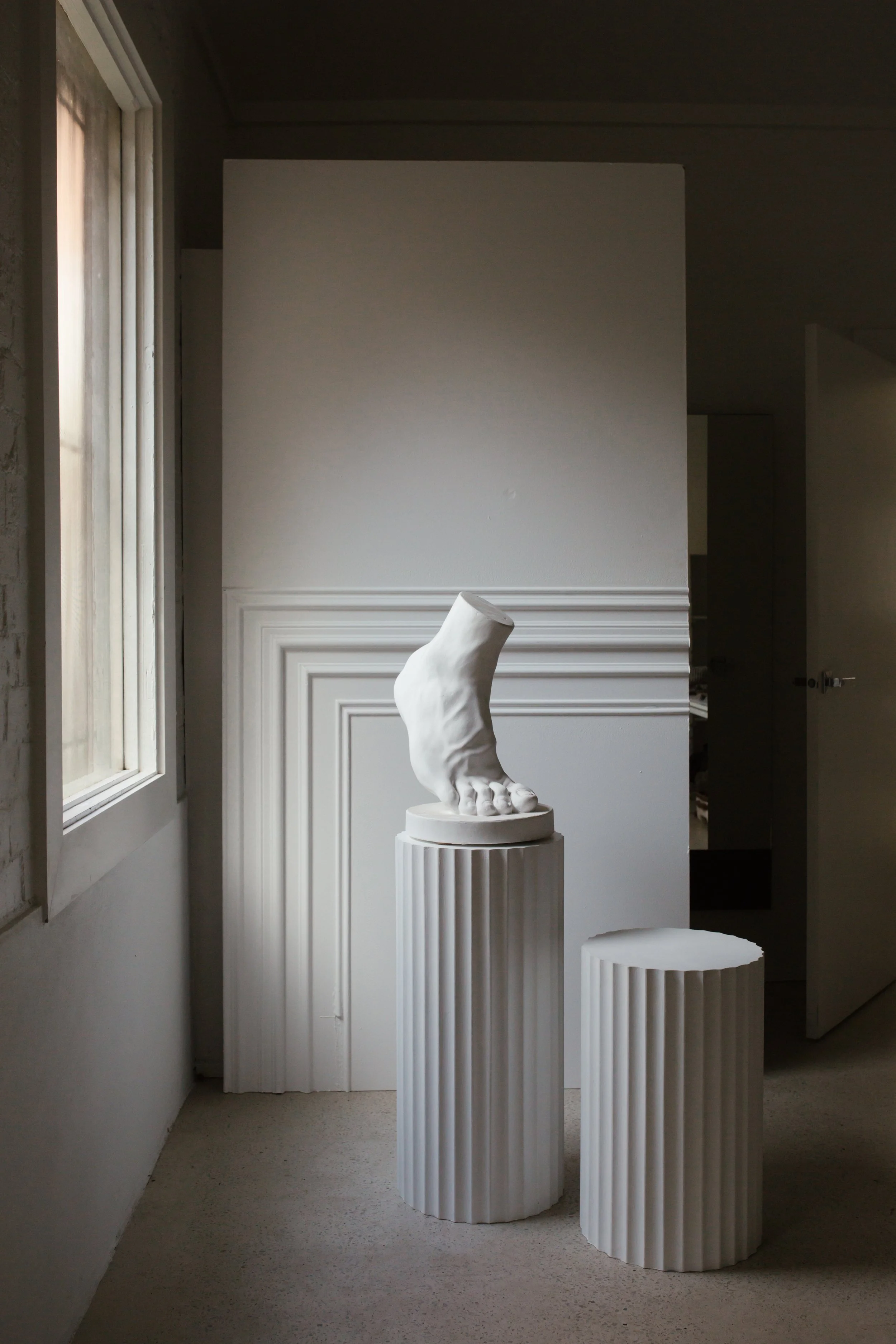
Objects Are Instruments: Every single one of our choices shape our experience, be it a room people are using, or a scene people are viewing. Notice how different each of these images feel, even though in essence we have used the same objects.
Lesson: Light
To ponder: “When you light a candle, you also cast a shadow.” ― Ursula K. Le Guin
Light – and its forever accompanying friend, shadow – is about casting an entirely new world on top of the one you have created. If you use it well, what you have designed will be so much more beautiful than the sum of its parts. A beautiful space with perfect lighting will be transformed into something that feels like you have walked into another dimension.
It’s easy to underestimate, or even overlook, light and shadow, probably because they’re not elements of your project that you can easily add to a list, unlike, say, paint colours and chairs. But for those creating spaces, either to be lived in or for their products to be photographed in, it’s worth thinking about how photographers view light and shadow. Ask any good one and they’ll tell you they are a painter with light. That’s a pretty powerful idea, and should give you some idea of what a difference they can make.
Before I start to consider objects as instruments in any space or scene, I think about light. How much do I want in order to create the feeling that I would like? In general, for me, as much as possible, but there are areas like bedrooms where I would like more shadow. I think about where I can add windows, where I can put glass in doors, where, failing that, a mirror could go – and I only hang window dressings where absolutely necessary for privacy and to block out any direct sunlight.
After I have designed my space, the next thing I start considering with light is artificial lighting. My personal philosophy is to always hang lighting low, mounted on the wall as a sconce – never, ever, ever on the ceiling – or to use lamps. Also, to always use far less lighting than you think you will need. The effect of all of this is an absolute dreamscape in the hours the sun is resting.
Workbook Time. Reach for your workbook, and complete Exercise 5.3. Let’s start consider lighting as a key part of our visual world.
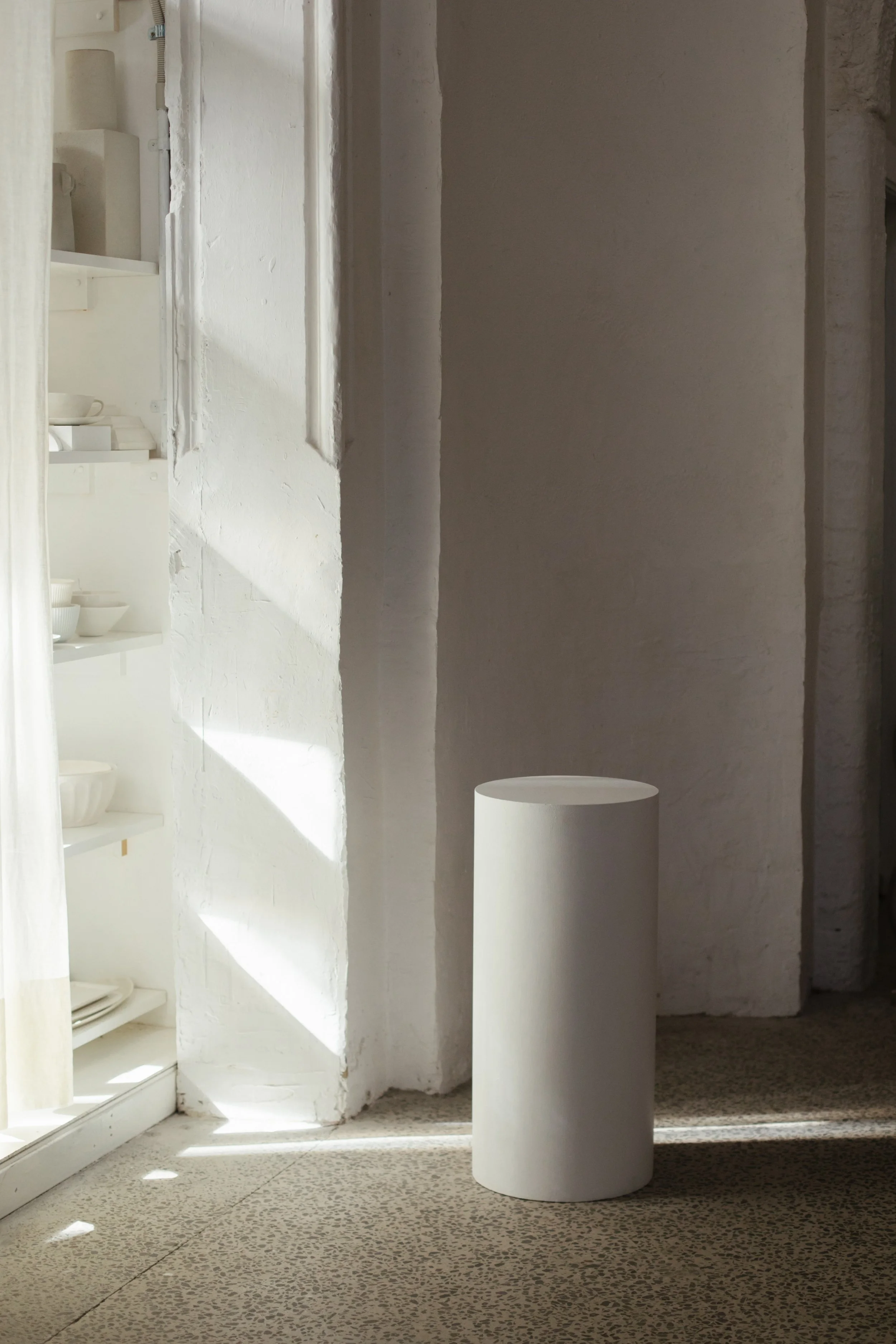
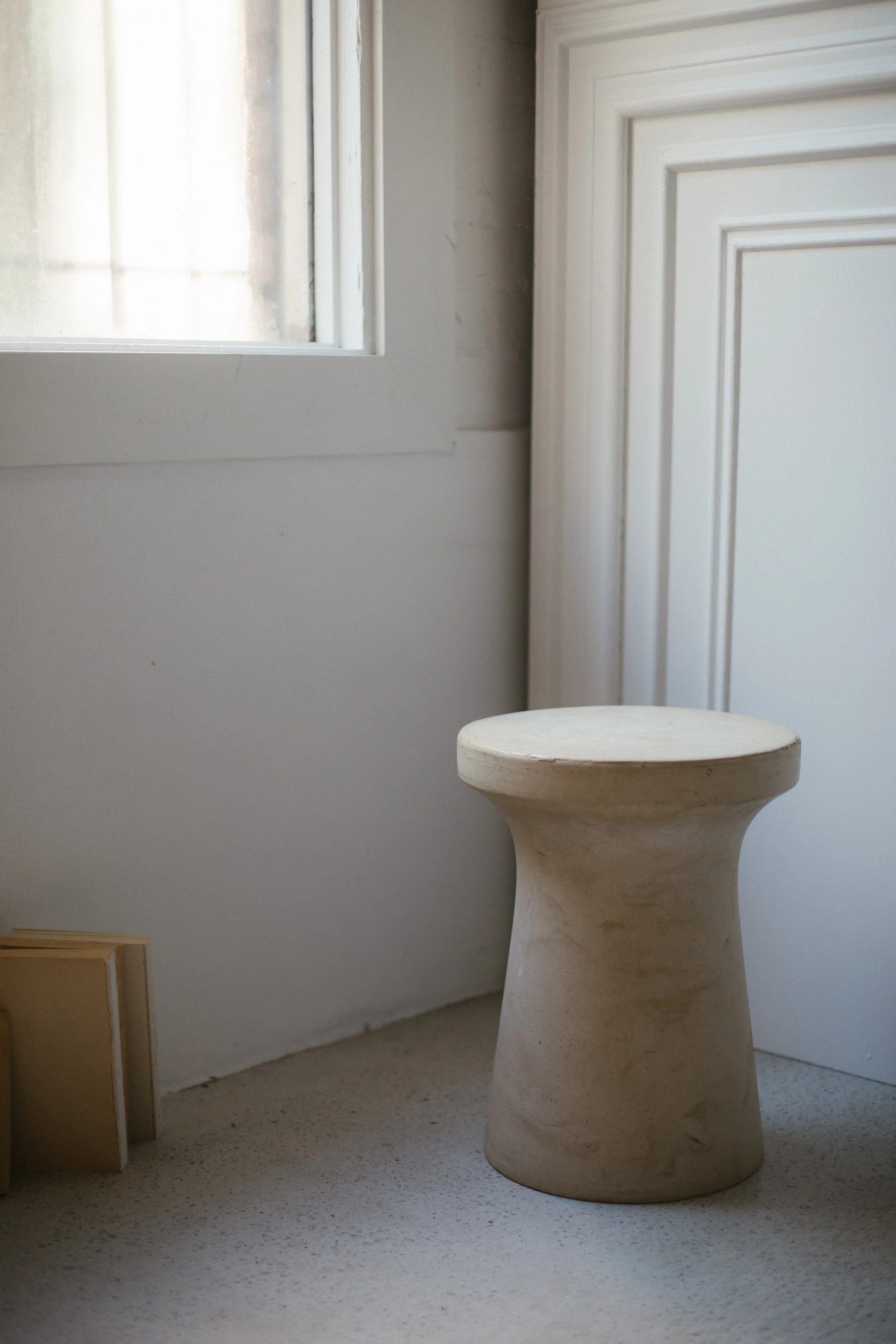
Above: Two very ordinary outtake moments from filming this class, made magical, very simply – with light. The ability to always consider it, and use it to our advantage is one of the hallmarks to becoming an Advanced Stylist. Start to learn to see it, and you’ll be able to make any moment magical.
Lesson: Life
To ponder: “To live is the rarest thing in the world. Most people exist, that is all.” ― Oscar Wilde
The next thing I love to consider in both my spaces, and my images – for those of you who might be looking to style and photograph your product, is to always include signs of life.
Spaces that don’t show signs of life have a certain flatness to them – they are forgettable and cold, but those that do capture both your heart and your attention. As we are humans, we connect with the humanness around us.
What I mean by this is the suggestion of people in a space. Stacks of books, shelves with useful and beautiful things on them rather than just objects of art and decoration. So that could be cups and saucers, a little bud vase by the bed with a sprig of something from the garden, perhaps some dried botanicals in a little vase next to a bath. As you are styling and arranging your spaces, don’t forget to just add a little pinch of human in there some way – it’s that often forgotten little sprinkle of fairy dust as the final touch that can make all the difference.
Workbook Time. Reach for your workbook, and complete Exercise 5.4, now.
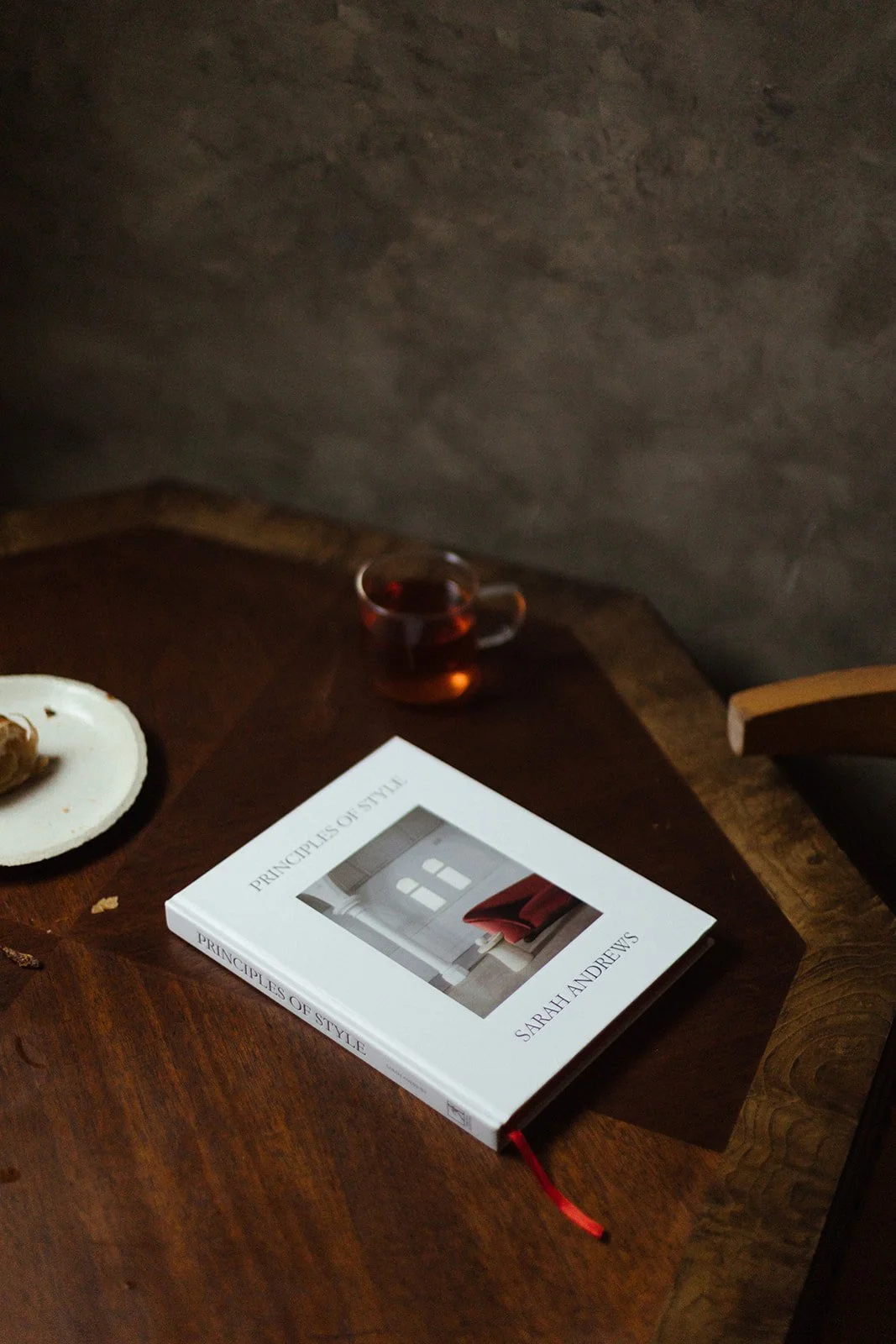
What’s missing? For me, it’s always sprinkling in that element of “life” to lift any space, image or moment. It is one of the keys to achieving Advanced Style that is so often overlooked.
Lesson: Scent
To ponder: “Odours have a power of persuasion stronger than that of words, appearances, emotions, or will. The persuasive power of an odour cannot be fended off, it enters into us like breath into our lungs, it fills us up, imbues us totally. There is no remedy for it.” ― Patrick Süskind
Mr Süskind has written the truest words I have ever read. It is so true that smells can have a far greater impact on us and our spaces than all the hard work combined we have put into our projects thus far. In my cabin, Captains Rest, which has become one of the most iconic stays in the world, almost every single guest writes to ask, ‘What’s that smell?’. We go to the absolute nines with linens and treats and snacks and mood and light – but it’s the few sprays of something special which floors them, and creates a stamp of memory for them for years to come. Scent has just as much impact on a human brain as sight, yes it is constantly, completely ignored in the work of creating spaces, and designing experiences. An oversight like this, if you think about it in mathematical terms, means your space lacks 50% of what the experience means to be in it! 50% is an incredibly easy win to gain if we start to make scent a practice in considering and designing our work. 50%!!!!!!!! I just can’t stress the importance of taking note here.
Types of scent affect our mood, spark memories and take us to a different time and place. It’s the key to helping create an experience which truly transports. The science of how scent works for a human is that it is first processed through the olfactory bulb, which is directly connected to the two brain areas which control our emotions and our memories. Visual, auditory and tactile information, which are connected to all the other areas of advanced style we are studying in these chapters, do not pass through these specific areas of the brain. That is why scent is such a huge part of creating that all-encompassing experience we are here to learn about. Think about this – smell is the only fully developed sense that one has in the womb, and it’s the one that is the most developed in a child up until about the age of 10 when sight takes over. For me, whenever I smell horses, hay, leather saddles and stables, I am powerfully moved more than any other day-to-day experiences I can think of. The last time I visited my parents, my mother had to pick up some chicken feed from a livestock supplier. The overwhelming memory of all those childhood scents made me, as a nearly 40-year-old woman, just sit down on the floor, close my eyes, smile and tell my poor mother ‘I don’t want to go just yet’. I sat there for 30 minutes thinking about my childhood on the back of my favourite horse and childhood companion, Bobby.
Aromachology is the scientific study of how odours influence human behaviour, and examine emotions, such as relaxation, exhilaration, sensuality, happiness and well-being, brought about by scent stimulating the brain. There has been so much exciting scientific work done for us in this area. For example, jasmine has been proven to create more interest in the spaces around us, pleasant aromas cause people to linger longer in rooms than they otherwise would have, and – proven time and time again – the scent of cookies baking sells houses! Luckily, we have so much access to wonderful scents, already designed for us to be used in whichever way we want to use them. We don’t need to understand the science of which scent does what, we just need to understand the power of using them – and seek out one that moves you in the way you’re after. In my supplier section I have listed my favourite sources for you to explore.
Another interesting fact to consider is that people smell in colour. Most associate citrus-flavoured mandarin with the colours orange, yellow and green. When smelling musty scents, people think of greens and browns. Fruity smells make people think of pinks and reds. Soap smells make people think of pastel colours, and peppermint and eucalyptus make people think of blues and greens. Smoke and thyme are associated with greys; liquorice, coal & incense with blacks; and whites are associated with the scent of white lily, milk, linen and coconut. These scent and colour profiles are good to write down to help pair scent with the colours in your spaces or your products/businesses. I can imagine walking into your all-white spaces to the scents of linen and milk … or your masculine black and grey spaces scented in thyme and coal.
This consideration in becoming an Advanced Stylist speaks mostly to those taking this class to create spaces. For all our other valued students here, consider how scent might make an impact if you were thinking about designing a retail space, a trade stall.
Lastly, a little bit of practical advice now we have covered the science and the basics for what we are working with.
Scenting a space is a little different to scenting yourself. Firstly, you need to be absolutely sure your spaces are clean. Ovens, range hoods and dirty couches need to be addressed – nothing will overpower them for long. So consider this first. Secondly, you need a room perfume – not a spray. Unfortunately, anything other than an actual perfume will not have the same impact. My general rule is one or two sprays per room on a soft furnishing, like couch or curtains ... or the inside of the toilet roll.
I challenge you all to continue experimenting and considering scent now for life with a curious mind and feel the impact for yourselves.
Workbook Time. Reach for your workbook, and complete Exercise 5.5, now. Let’s pick a small part of our project, and think through the scenting of it.
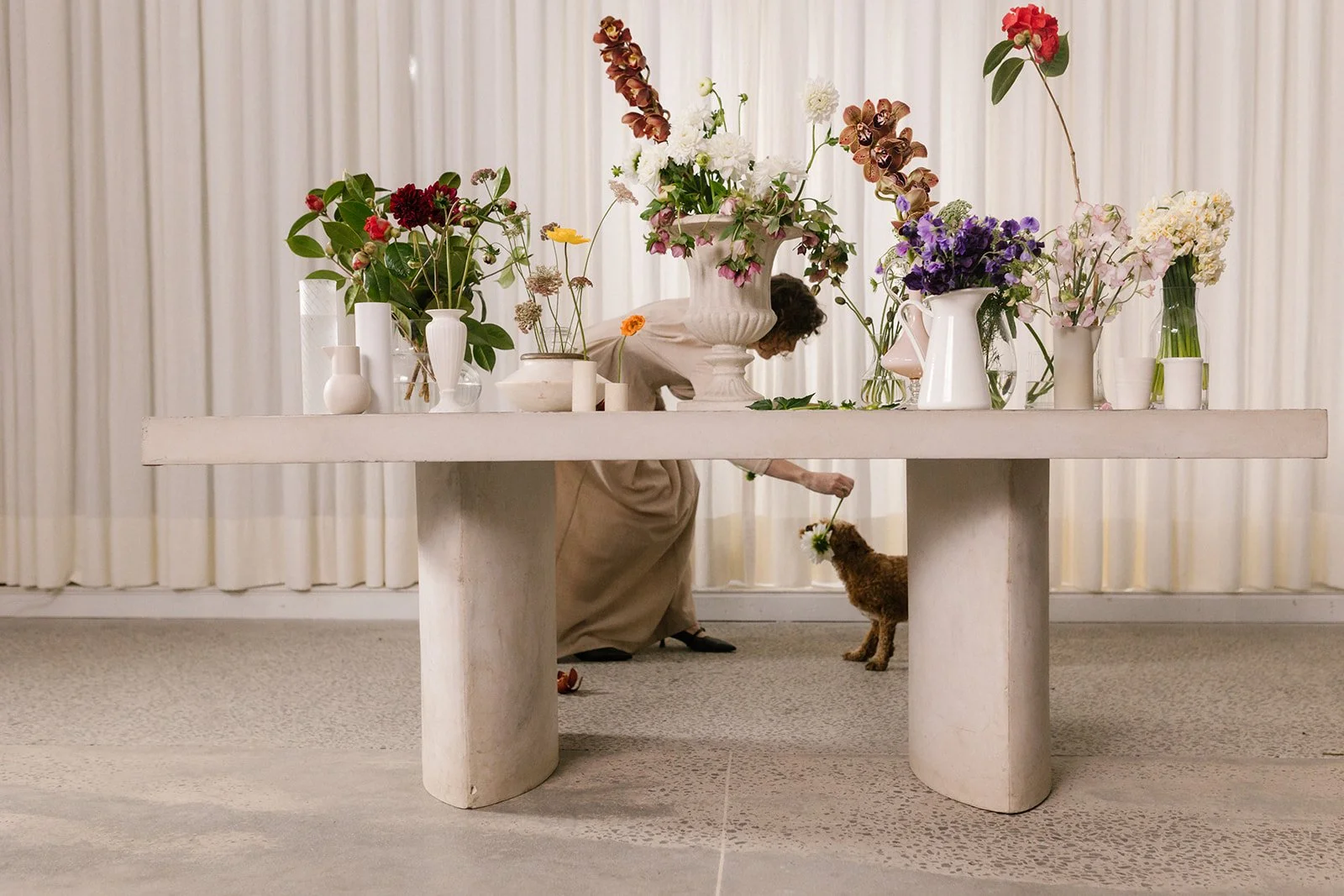
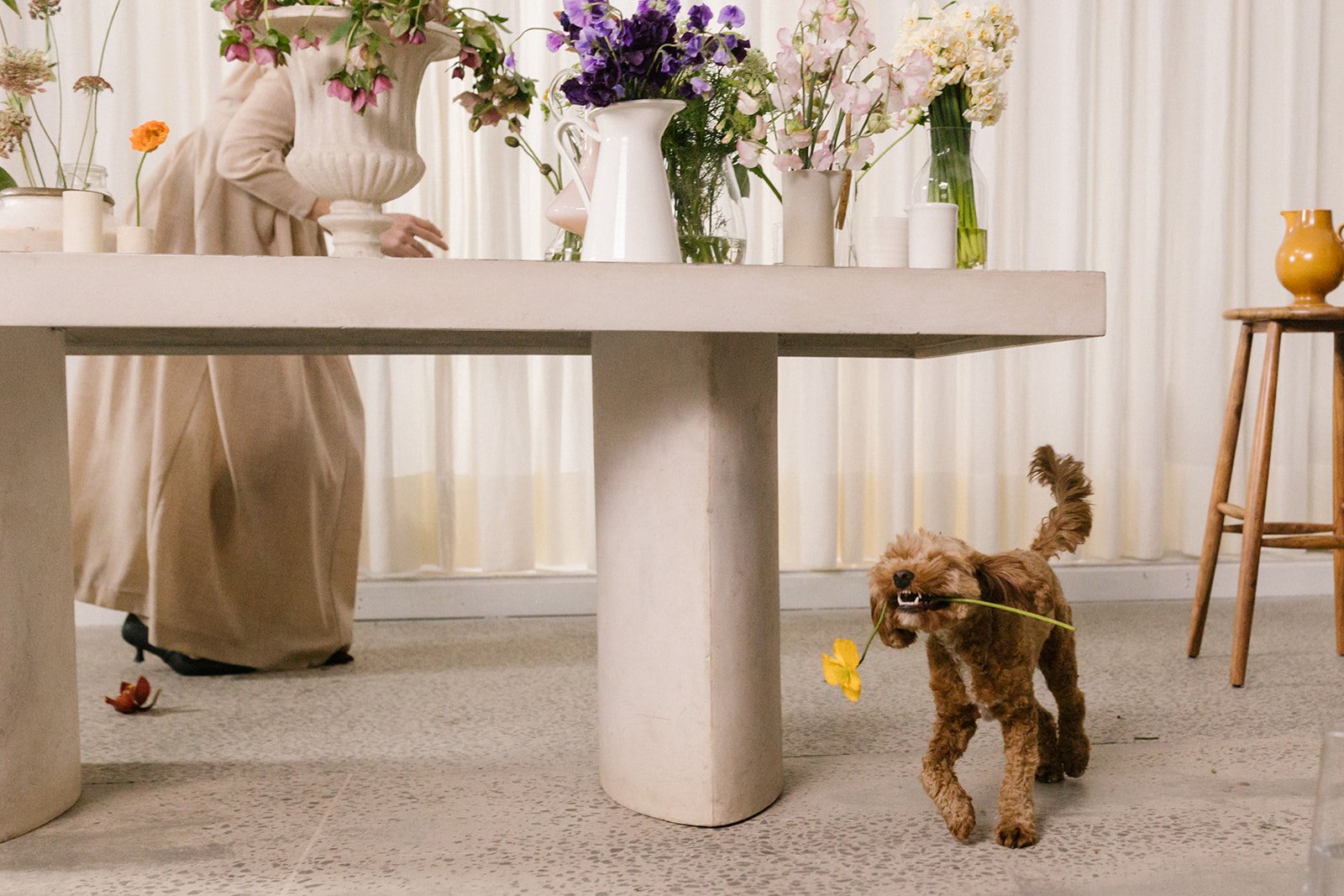
Scent: The world of this fifth sense is just as rich as sight – however it is so often overlooked in our race for visual perfection. As Advanced Stylists we are aiming to create worlds that bring joy across the board. Dogs access scent first as their mode of knowledge, but I think it’s an art we’ve chosen to ignore. Never again!
Lesson: Poets, Artists and Renegades
To ponder: “Art isn’t only a painting. Art is anything that’s creative, passionate, and personal. And great art resonates with the viewer, not only with the creator. What makes someone an artist? I don’t think it has anything to do with a paintbrush. There are painters who follow the numbers, or paint billboards, or work in a small village in China, painting reproductions. These folks, while swell people, aren’t artists. On the other hand, Charlie Chaplin was an artist, beyond a doubt. So is Jonathan Ive, who designed the iPod.
An artist is someone who uses bravery, insight, creativity, and boldness to challenge the status quo. And an artist takes it personally. That’s why Bob Dylan is an artist, but an anonymous corporate hack who dreams up Pop 40 hits on the other side of the glass is merely a marketer. Art is a personal gift that changes the recipient. The medium doesn’t matter. The intent does. Art is a personal act of courage, something one human does that creates change in another.” ― Seth Godin
What I’ve been dying to tell you all along, is that you are all here – because you have the souls of artists. I know most taking this class have come about it by my following my work, along with my many students around the world – who have all gone on to do great things, despite the odds – and this has inspired you to seek for more. The quote by Seth Godin above is one of my favourites; as we’ve told you all along, anyone can paint by numbers – but it is true art, true creativity and truly discovering what it is to be you that can create real change, for yourself or for those who you are sharing your world in some way with. Great art, great spaces, great products or ideas really resonate with so many, because they are rare. Does this take you back to chapter one? See how everything we’ve been working on, understanding and learning up until this point is finally coming together?
Advanced Stylists (you), are poets, dreamers and renegades against the status quo. But we don’t promise any of this is easy. I’ve yet to meet a single person who doesn’t struggle with the self-doubt, shyness about their ideas and a sense of imposter syndrome. The good news is that if you can learn to go on despite this, it does get easier. It is one of the questions I get asked the most, ‘How do I conquer my fear?’ The answer is, well – if you have fear, congratulations, you are officially an artist rather than one just doing a job. Secondly, just grit your teeth and do it, it gets easier as the years roll on, because you start to care less about what others might think. A confidence in your own ability to create your world starts to develop. Bravery is often a learnt skill, one that is part of the work you are here to do.
Remember this as we launch into the final exercise for this chapter, but before you go, one last quote that I very much love – and is eternally relevant.
To ponder: “There are those who spend lifetimes in houses that have nothing to do with who they really are. They may be perfectly designed, yet if they fail to reflect the personalities of the people who live in them, the very essence of intimacy is missing and this absence is disturbingly visible.” — Rose Tarlow
05. Homework
Read. Marginalian, The Poetics of Smell as a Mode of Knowledge.
And finally – if you complete no other homework than this, please watch this speech from start to end by great Philosopher & Artist, Steve Jobs.
05. Community
Any work, or ideas you are posting related to this class, please use the hashtags #principlesofstyle and #poss05 so your fellow classmates can connect with you and continue to grow this community.